
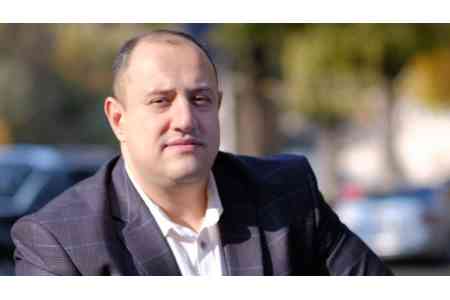
ArmInfo. Former National Assembly member and PhD in history Mihran Hakobyan reminds us that public debt, both domestic and foreign, is formed based on clear programs and international agreements. "Nikol (Armenian Prime Minister Nikol Pashinyan - ed.) is lying when he says he shifted the $8 billion debt onto the shoulders of the state, that is, the taxpayers of the Republic of Armenia, for the purchase of weapons," he writes on social media.
As a reminder, Armenia's public debt in 2017 was 3.28 trillion drams, or $6.77 billion (Prime Minister Nikol Pashinyan came to power as a result of the 2018 "velvet revolution" - ed.). In September 2025, it had risen to 5.43 trillion drams ($14.20 billion). On November 13, Prime Minister Nikol Pashinyan explained the sharp rise in the country's public debt in parliament by citing weapons purchases and COVID-19. "And they're blaming us, saying, 'Why has the foreign debt risen to $8 billion? What did we do with those funds?' I didn't want to say, but I will - we bought weapons. We bought weapons on credit because we needed a lot of weapons all at once," Pashinyan said.
"He's lying because the debt structure is publicly available, and anyone can see the terms and purposes of the debtors' borrowing of $8 billion. Moreover, anyone who wants to can see from public sources that the debt was taken out primarily so Nikol could pay salaries to the government apparatus and bonuses for his gang and the cops."
Nikol's lies are horrific because it reveals he lost the debt war and capitulated. He surrendered Artsakh, and in return saddled taxpayers with another $8 billion debt. "This isn't a lie; it's theater of the absurd," Hakobyan notes.
In fact, he continues, if Nikol Pashinyan had bought weapons with those $8 billion, today "he would be giving orders to Aliyev, not the other way around." "He bought $8 billion worth of weapons to do what- lick the Turks' boots," concludes Migran Hakobyan.
According to the draft state budget for 2026, Armenia's public debt will increase by 695 billion drams ($1.82 billion) by the end of 2025, reaching 5 trillion 820 billion drams, or 52.9% of GDP, and by the end of 2026, it will reach 6 trillion 569 billion drams (approximately $17.1 billion, or -382.61 drams), or 55% of GDP. The share of foreign currency debt will also continue to increase. In 2026, 1 trillion 053 billion drams will be required to repay and service the public debt, of which 629.8 billion drams will be debt payments and 423.2 billion drams will be interest payments, compared to the expected budget estimate of 3 trillion 91 billion drams. That is, out of every three drams earned, one dram is paid to creditors. As economists note, the public debt has not only doubled but has also become the main "breathing apparatus" of the Armenian budget.















 Expert: Azerbaijan`s political leadership states `occupation of Armenia is their new national goal`
  Expert: Armenian society falls into security trap of totalitarianism
 Expert: Pashinyan`s visit to Russia creates prerequisites for restoring dialogue, but thaw in relations is more symbolic
 Human rights activist Ruben Melikyan dismissed from YSU
 Pashinyan removed from INNOPROM guest list
 Zakharova: Armenia`s pro-EU pivot poses economic security risks to EAEU member states
 It`s time for South Caucasus countries to think of South Caucasus as single, unified region - RA premier
  Pashinyan: Armenia and Azerbaijan should leave each other alone
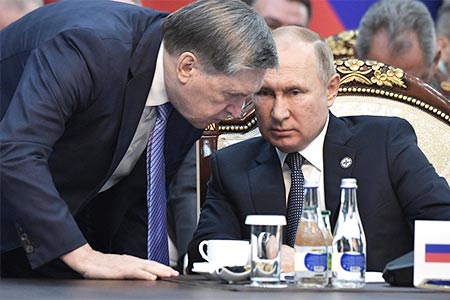 Moscow sees situation with Armenia as attempt to attack Russia-involving integration associations - Russian presidential aid
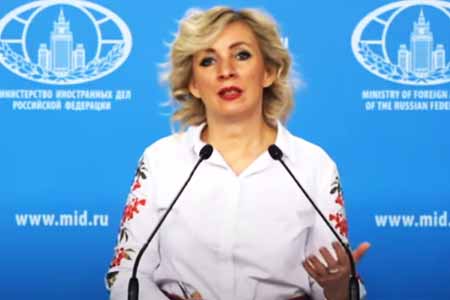 Zakharova: Armenia views relations with Russia as tool for financially securing reorientation toward EU
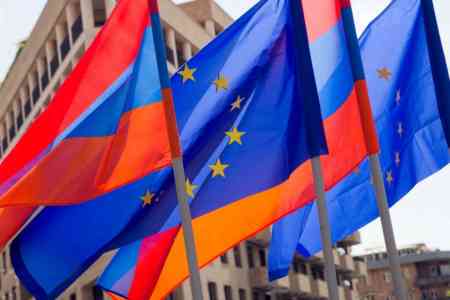 The Armenian Minister of Justice and the EU Ambassador discussed visa liberalization issues for Yerevan.
 Azerbaijan`s aggressive plans against Armenia became possible in wake of Pashinyan`s decisions on Artsakh - expert
  Zakharova: Russia sent a note of protest to Armenia over the act of vandalism at the "Mother Armenia" memorial in Gyumri
 Samvel Karapetyan proposes creating a post-election opposition coalition
 Artsakh`s Cultural Heritage Ombudsman called on Moscow to respond to destruction of WWII monuments by Azerbaijan in occupied NKR
 Prosecutor General`s Office petitions Central Electoral Commission for criminal prosecution of Robert Kocharyan
 Dutch Prime Minister expresses his support for Armenia`s democratic reform and economic diversification agenda
 Heritage: It`s time for Armenia`s opposition to present people with legitimate alternative to power