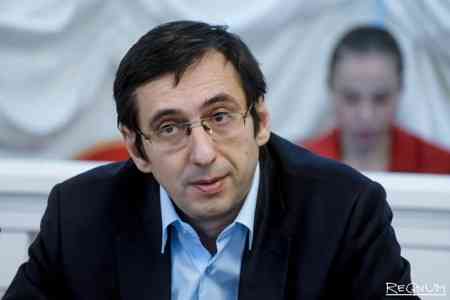
ArmInfo. Armenia's simultaneous membership in both the European Union and the Eurasian Economic Union is practically impossible, as stated by Andrey Areshev, an expert at the Gorchakov Fund, during the discussion " EAEU or EU. Armenia's choice in the context of shaping new global order".
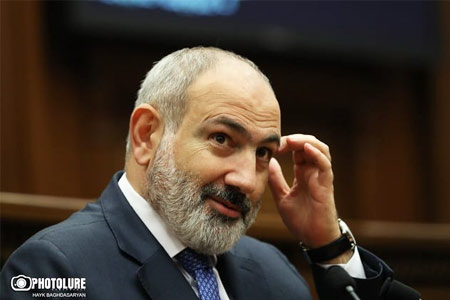
According to him, Yerevan fully understands both this fact and Brussels' reluctance to launch any European integration process outside the framework of certain programs. "This is what European officials are actually saying, claiming that the issue of Armenia's accession to the EU is not on the Union's agenda. In my opinion, this issue is purely internal and political in nature," the expert said, pointing to RA Prime Minister Nikol Pashinyan's recent statement regarding the potential for alternative food supplies to the EU.
"This statement raises many questions, especially considering the significant amount of Russian agricultural products supplied to the republic. Such statements are superficial and not adequately developed, creating some discord into Armenian-Russian relations, especially in light of the frequently heard statements about the inviolability of Yerevan's membership in the EAEU and the positive progress with this structure and in relations between Armenia and the Russian Federation," Areshev emphasized.
He noted that expectations of a reduction in Russia's economic and political presence in the South Caucasus region, given the profound changes observed today may not be justified. In this case, Areshev continued, we are talking about Russian-American high-level political consultations. Given the current events, it is essential for Armenia to avoid making any hasty decisions that could further deteriorate economic ties with the countries of the EAEU and the Russian Federation, which benefit all parties involved. "It is evident that both Moscow and Yerevan value the existing ties. The Caucasus region holds significant importance for Russia. Shifting towards EU countries is a manipulative tactic aimed at a domestic audience, potentially leading to shifts in public opinion in Armenia and Russia," Areshev noted.
He emphasized that the issue of Armenia's choice between Eurasian and European integration did not arise overnight. It began to take shape in 2013, when Armenia tried to follow a complementary course. This course led to the signing of the Comprehensive and Enhanced Partnership Agreement between Armenia and the EU in 2017, under the leadership of the third President of the Republic of Armenia Serzh Sargsyan. However, in 2018, with Nikol Pashinyan coming into power, a new phase gradually unfolded. At the initiative of a number of parties and public organizations, discussions began regarding the possibility of holding a referendum on the country's potential accession to the EU. This has been an ongoing issue, to which the Russian side responded quite specifically," the Russian expert said. He pointed out the controversial processes taking place in Europe today, with a clear example being the elections in Germany, where right-wing radical parties are gaining momentum. "The buffoonery staged by Donald Trump, who, along with his team, is both a revisionist and a globalist at the same time, shows that the United States will assert global dominance in one form or another. The goal of this administration is to worsen relations between Russia and Europe, posing a challenge for the Russian Federation and its partners, including Armenia and various Eurasian integration associations," the expert clarified, highlighting the Turkish factor in this matter.
He emphasized that the processes taking place in the region and the statements of RA Prime Minister Nikol Pashinyan indicate Yerevan's intentions to integrate its policy into Turkish-Azerbaijani integration, which, to some extent, also aligns with the interests of the EU. The same Middle Corridor and other infrastructures that bypass Russia are linked to the EU's intentions to establish diversified communication corridors. "Taking all these factors into account, it would be unwise for Armenia to pursue a course that would further deteriorate relations with Russia," Areshev stated.












 RA Government guarantees high salaries for CC justices, Syunik families deprived of family benefits - politician
  Armenian experts, leading Turkish think tanks discuss prospects for expanding cooperation
  Political Scientist: As long as the opposition remains silent, Pashinyan can use Plan B and secure a constitutional majority
 US-Iranian memorandum more beneficial for Iran from political and economic perspective - expert
  Zakharova: Armenia`s pro-EU pivot poses economic security risks to EAEU member states
 It`s time for South Caucasus countries to think of South Caucasus as single, unified region - RA premier
  Pashinyan: Armenia and Azerbaijan should leave each other alone
 Moscow sees situation with Armenia as attempt to attack Russia-involving integration associations - Russian presidential aid
 Zakharova: Armenia views relations with Russia as tool for financially securing reorientation toward EU
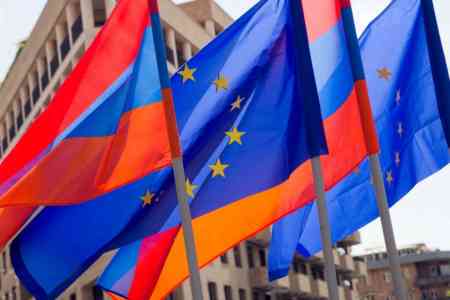 The Armenian Minister of Justice and the EU Ambassador discussed visa liberalization issues for Yerevan.
 Azerbaijan`s aggressive plans against Armenia became possible in wake of Pashinyan`s decisions on Artsakh - expert
  Zakharova: Russia sent a note of protest to Armenia over the act of vandalism at the "Mother Armenia" memorial in Gyumri
 Samvel Karapetyan proposes creating a post-election opposition coalition
 Artsakh`s Cultural Heritage Ombudsman called on Moscow to respond to destruction of WWII monuments by Azerbaijan in occupied NKR
 Prosecutor General`s Office petitions Central Electoral Commission for criminal prosecution of Robert Kocharyan
 Dutch Prime Minister expresses his support for Armenia`s democratic reform and economic diversification agenda
 Heritage: It`s time for Armenia`s opposition to present people with legitimate alternative to power
 RA Security Council Sec, Assistant to President of Azerbaijan hold negotiations in Dilijan
  CEC Neutralizes PAP: Three Political Forces to Enter Armenian Parliament Following Election Vote