
ArmInfo. The Lemkin Institute for Genocide Prevention drew attention to the policies of Armenian Prime Minister Nikol Pashinyan and members of his team, which are at odds with the fundamental principles of genocide prevention, genocide recognition and justice, and which directly relates to Armenian national security issues.
Thus, the Institute's statement notes, in particular: "In the wake of the Artsakh genocide, the Lemkin Institute remains committed to engaging in active prevention work in the South Caucasus while advocating for justice and accountability. While we do not generally involve ourselves in domestic affairs of states unless there is an internal threat of genocide, we must address concerns stemming from recent statements made by Armenian Prime Minister Nikol Pashinyan that appear to diverge from fundamental principles of genocide prevention, genocide recognition, and transitional justice, and that directly relate to issues of Armenian national security. We are particularly perplexed and alarmed by aspects of Prime Minister Pashinyan's commemorative statement on 24 April 2024 (Armenian Genocide Remembrance Day), as well as a recent interview with Pashinyan's associate Hovik Aghazaryan questioning Armenia's legal basis to pursue justice against Turkiye, and discussions led by Civil Contract party member and parliamentarian Andranik Kocharyan about compiling a list of genocide victims. On 24 April, Armenian Genocide Remembrance Day, the Armenian Prime Minister released an official commemorative statement in which he appears to engage in victim blaming with the purpose of questioning the accountability of Turkiye and Azerbaijan for the crime of genocide. His statement further appears to erase the ongoing threats posed to Armenia by Turkiye and Azerbaijan by reframing them as the baseless trauma-induced fears within Armenian society. Pashinyan's apparent agreement with key points in T rkiye and Azerbaijan's denialist narratives as well as his apparent embrace of these countries' assertions that Armenia is the obstacle to peace in the South Caucasus have met with sustained controversy within the Armenian public. Perhaps most striking about Pashinyan's statement on the genocide was the absence of any mention of aggressors. In paragraph three, for example, Pashinyan - discussing the period in the Ottoman Empire leading up to the 1915 genocide - cryptically asserted that"...the Armenian people, who had no statehood, had lost their statehood centuries ago, and essentially had forgotten the tradition of statehood, became victims of geopolitical intrigues and false promises, lacking first of all a political mind capable of making the world and its rules understandable." This statement seems to assert that Armenians mysteriously experienced genocide due to their own witlessness. By asserting that Armenians were solely "victims of geopolitical intrigues and false promises," Pashinyan further disregards the long-term and multi-layered historical oppression of Armenians in the Ottoman Empire as well as the deep and visceral contempt for Armenians among members of the Committee of Union and Progress, the ruling party during the genocide. In other words, Pashinyan's statement fails to recognize the role played by the ethnic, religious, and cultural animosity for Armenians in the Turkic supremacist campaign of extermination that targeted Armenians during World War I. Furthermore, instead of attributing blame for the genocide to the leaders of the Ottoman Empire during World War I, Pashinyan redirects attention towards Armenians, and specifically their apparent incapacity to understand politics at the time. He appears to be referencing the actions of the Russian Empire and Western powers during that era, who promised to protect Armenians but did not follow through, which aggravated the Ottoman leaders' sense of external threat to the empire and drew negative attention to the Armenians as 'foreign agents'. However, he does not state this outright; instead he seems to believe that Armenians brought the genocide upon themselves by misunderstanding the political terrain. Pashinyan's talking points in this passage seem ironic, given that he has himself embraced Western offers to save Armenia from its hostile neighbors. Yet, his talking points also echo the official position of Turkiye regarding the Armenian Genocide which justified it by contracting "against an onslaught of external invaders and internal nationalist independence movements". By parroting the Turkish narrative of the events of 1915-1923, the Armenian Prime Minister risks absolving Turkiye of its responsibility for the Armenian Genocide, downplaying all previous acknowledgment efforts. Further, it may substantially hamper the continuing work on international recognition of the Armenian Genocide and Turkish accountability - something that the worldwide Armenian diaspora, as well as genocide scholars and activists, have been fighting for. Pashinyan's argument that "Armenian people, who had no statehood, had lost their statehood centuries ago, and essentially had forgotten the tradition of statehood" inexplicably plays into the denialist agenda of Turkiye and Azerbaijan by obliquely mischaracterizing Armenian efforts to gain equal rights and human security in the Ottoman empire with foolish attempts to exercise a quest for independent statehood for which they had no capacity. The vast majority of Armenians under Ottoman rule were not seeking secession, but rather security and justice. Pashinyan's words directly echo the official Turkish view of the Armenian people as rebellious "traitors" who collaborated with hostile European powers to bring about the dissolution of the Ottoman Empire, and who therefore betrayed the country. In fact, in this passage, Pashinyan seems to be making the case that Armenians can only avoid future genocides by capitulating to present-day Turkiye's expansionist designs. Pashinyan clearly sought in his speech to challenge the wisdom of seeking accountability from Turkiye. He noted that "[Armenians] must stop the searches of a homeland, because we have found that homeland, our Promised Land.but the found and real homeland, in the person of the Republic of Armenia." While land disputes arising from genocide can certainly set the stage for another genocide of the landless survivors, jettisoning the rights to memory and to property is not something that can be done by a leader as a fait accompli. While certainly the modern Republic of Armenia deserves celebration as a homeland for all Armenians, the millenia-long presence of Armenians in the region known as 'historical Armenia' (including Western Armenia, Nakhijevan, and Artsakh) should not be ignored. Indeed, Turkiye should be brought to understand that it must seek reconciliation with Armenia - not the other way around. Alarmingly, Pashinyan's words come shortly after Hovik Aghazaryan, Armenian National Assembly member and ally to Nikol Pashinyan, stated in an interview that "[b]ecause the Genocide took place in the Ottoman Empire.We as a state did not exist then, so we cannot be the demanding party. We cannot demand anything from Turkiye.Based on what international standards?" Aghazaryan displays a startling lack of understanding of transitional and restorative justice mechanisms in the wake of mass atrocity, which unfortunately only helps Recep Tayyip Erdogan and Ilham Aliyev avoid historical responsibility for the Armenian Genocide. Furthermore, this narrative could potentially weaken international efforts to recognize and address the Armenian Genocide by casting doubt on Armenia's legal basis to pursue justice. It is crucial to recognize that the absence of statehood at that time does not diminish Armenians' status as victims of genocide or negate their right to seek justice for the crimes committed against their ancestors. Other indigenous groups who have experienced genocide have pursued justice long after the fact, including the Herero and Namaqua people in Namibia and indigenous Canadians, Australians, and Americans. The point of the recent spate of cryptic messages from Civil Contract Party members seems to be summed up in a passage in Pashinyan's statement that casts doubt on the capacity of the Armenian nation to properly analyze reality. Pashinyan suggested that the trauma of the genocide (referred to here by its Armenian name, Meds Yeghern, or 'Great Evil Crime') is coloring the perspective of Armenians on the current crisis in the South Caucasus: "Meds Yeghern became a nationwide tragedy and grief for us, and without exaggeration, is a predetermining factor for our socio-psychology. Even today, we perceive the world, our environment, ourselves under the dominant influence of the mental trauma of the Meds Yeghern, and we have not overcome that trauma. This means that, being an internationally recognized state, we often relate and compete with other countries and the international community in a state of mental trauma, and for this reason, sometimes we cannot correctly distinguish the realities and factors, historical processes and projected horizons." Pashinyan's talking point here echoes language one often hears in Western policy circles, which suggest that Armenians have nothing real to fear from Turkiye and Azerbaijan and instead are exhibiting a kind of 'genocide syndrome' that makes them poor reporters of their own conditions. While the Lemkin Institute does not deny that communities that have experienced genocide are irredeemably impacted by that experience, we dispute the psychologization and pathologization of that experience, which suggests that the lessons learned make people unnecessarily alert. In our experience, genocide survivors and their descendants have a very keen read on the world and are well positioned to see genocides around them, including threats of genocides against their identity group. It is important to note that Turkish President Erdogan stated only a day before, referring to Armenia, that, "[i]t is always better to act on the realities of the time than to act on fictional historical narratives that have nothing to do with reality. Pashinyan has already understood this." It's deeply troubling for the Armenian Prime Minister thought to align his commemorative remarks with with the stance of Turkiye's premier, especially considering Erdogan's consistent denial of the Armenian Genocide. Pashinyan ends his statement with another baffling point, this one about the idea of "Never Again." "Never again," he said. "We should not say this to others, but to ourselves. And this is not an accusation against us at all, but.only we,[sic] are responsible and the director of our destiny and we are obliged.to carry that responsibility in the domain of our sovereign decisions and perceptions." It is hard to read this sentence as implying anything except that the responsibility for preventing genocide by Turkiye and Azerbaijan rests on the Armenian people themselves. In fact, Pashinyan's use of the word "responsible" suggests that he views the genocide as a punishment for their "mistakes" under the Ottomans. This framing shifts the burden for preventing future atrocities onto the victims of genocide, which is unfair and unjust. Such victim blaming is a denial technique used by perpetrators and occasionally a defense mechanism among members of the victimized group who resent past vulnerability and feel shame. However it is used, victim blaming always expresses hostility to the victimized group, which is never to blame for genocide. Finally, and worryingly, this statement lacks any mention of a call for collective and international action to uphold and advocate for prevention and recognition, absolving other nations and actors of their obligations to intervene in cases of genocide. Armenian concerns about Pashinyan's April 24 statement must be understood in the context of other baffling statements from Civil Contract party members this spring, which have made Armenia's land concessions to Azerbaijan all the more alarming. On April 16 Armenian MP Andranik Kocharyan claimed that Prime Minister Nikol Pashinyan was planning to compile a comprehensive list of victims of the Armenian Genocide to establish irrefutable documentation of the genocide's victims and to verify "where, how and under what conditions" they were killed. He emphasized the importance of this list for future foreign relations, suggesting that without it, the genocide could be denied by the "other side" (i.e. Turkiye). Kocharyan later retracted his claims following criticism, stating that Pashinyan had not actually aimed to compile such a list and that the topic was not under discussion within the ruling party. Armenian genocide scholars were alarmed by this statement, as Turkiye has been demanding such a list since the 1960s in its efforts to deny the Armenian genocide. Retrieving comprehensive records of victims poses significant challenges, primarily due to the absence of official and full documentation for many individuals who undoubtedly perished. This challenge is aggravated by historical practices within the Ottoman Empire, which often neglected records related to its ethnic minorities. Turkiye's historical erasure and falsification of archives further exacerbate the issue, making it increasingly difficult to access accurate information. As genocide expert Dr. Suren Manukyan, UNESCO Chair in Genocide Studies at Yerevan State University, pointed out, it is essential to recognise that the concept of genocide extends beyond mere mortality statistics. Article II of the Convention on the Prevention and Punishment of the Crime of Genocide does not specify a particular number of victims required for an act to be classified as genocide. The number of victims will not change the fact that the Armenian Genocide remains a genocide. Therefore, fixating solely on compiling a list overlooks the multifaceted nature of genocide and its profound implications. The Armenian Genocide is of course not the only case where compiling a comprehensive list of victim names is an impossible task. Despite thorough record-keeping efforts by Nazi Germany and the availability of relevant archives post-war, along with systematic interviews conducted with survivors, for example, there is still substantial disagreement regarding the precise number of Holocaust victims. The Turkish state regularly polices statements commemorating the Armenian Genocide. No country is immune from the pressure, as was evidenced by President Barack Obama's choice not to label the massacre of Armenians under the Ottoman Empire as genocide during the 100th anniversary commemoration in an effort to balance the US-Turkiye relationship amidst regional instability. While recognizing the significance of the centennial to the Armenian people, the administration emphasized a commitment to addressing atrocities without explicitly using the term "genocide." This decision disappointed Armenian- American groups, and even some of Obama's allies, who saw it as a betrayal of truth and trust. Pashinyan, though he continues to call the Armenian genocide a genocide, is nevertheless pursuing talking points that are at odds with the field of genocide studies, the ample historical documentation of 1915-1923, as well as the vast majority of Armenians. Tellingly, this year President Joe Biden released a more strongly-worded statement than Pashinyan. Pashinyan bears responsibility for any statements that deny or downplay the Armenian Genocide, as they not only jeopardize the painstaking efforts to secure its recognition, but also establish a dangerous precedent for the whitewashing of such atrocities amid a shifting geopolitical landscape that is threatening Armenian sovereignty. While the Lemkin Institute understands that the Prime Minister is under immense pressure from his neighbors, as well as foreign powers, to mollify and perhaps capitulate to the demands of Armenia's hostile and threatening neighbors, we also know that efforts to appease genocidal states are almost always in vain. The Prime Minister must uphold the integrity of historical truth and acknowledge the gravity of genocide to prevent its recurrence and ensure justice for the victims, while safeguarding against future atrocities. This becomes even more critical in the context of alarming Azerbaijani territorial claims and its enduring genocidal policies against Armenians over the past decades. Not confronting historical truths only emboldens those who seek to erase or distort history for their own agendas. Genocide stands as one of humanity's darkest crimes, and any attempt to rationalize, justify, or sanitize it must be rejected. If the Prime Minister is calling for Armenians to address transgenerational trauma as a nation, it is important to note that this can only be accomplished through national discussions and education programs. Speeches by leaders are not enough. It is essential to confront the past, but it is also essential to hold perpetrators accountable. As an organization dedicated to genocide prevention and the promotion of accountability and justice, we urge Prime Minister Pashinyan to reconsider his statements and reaffirm Armenia's commitment to pursuing justice for the Armenian Genocide. The Lemkin Institute must underscore the fact that the threat to peace and security in the South Caucasus is not Armenia, but rather Azerbaijan and Turkiye, both of which harbor pan-Turkic aspirations, continue to promote genocidal Armenophobia globally, and have shown no interest in demonstrating respect for Armenian identity, culture, or sovereignty. These leaders, and the publics they serve, should be the ones called upon to examine their social psychology in the name of creating peace. It's imperative for all leaders to stand firmly against genocide and its denial while working toward acknowledging historical truths to foster healing and prevent future atrocity crimes. It is harmful and unacceptable for the leader of a nation that has experienced genocide to engage in narratives crafted by perpetrators to deny their responsibility. Peace cannot be forged through lies, nor can genocidal states be assuaged by rhetorical capitulation. When leaders deny or downplay genocides, it sets a dangerous precedent that can embolden perpetrators and diminish the urgency of preventing future atrocities."
















 South Caucasus is entering a new phase of turbulence - ex-official
  Expert: Azerbaijan`s political leadership states `occupation of Armenia is their new national goal`
  Expert: Armenian society falls into security trap of totalitarianism
 Expert: Pashinyan`s visit to Russia creates prerequisites for restoring dialogue, but thaw in relations is more symbolic
 Human rights activist Ruben Melikyan dismissed from YSU
 Pashinyan removed from INNOPROM guest list
 Zakharova: Armenia`s pro-EU pivot poses economic security risks to EAEU member states
 It`s time for South Caucasus countries to think of South Caucasus as single, unified region - RA premier
  Pashinyan: Armenia and Azerbaijan should leave each other alone
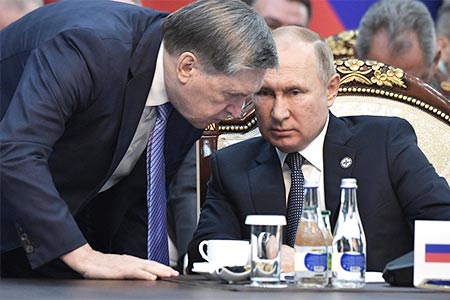 Moscow sees situation with Armenia as attempt to attack Russia-involving integration associations - Russian presidential aid
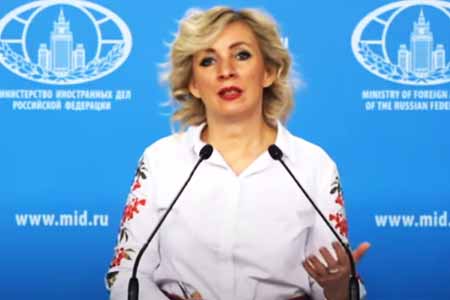 Zakharova: Armenia views relations with Russia as tool for financially securing reorientation toward EU
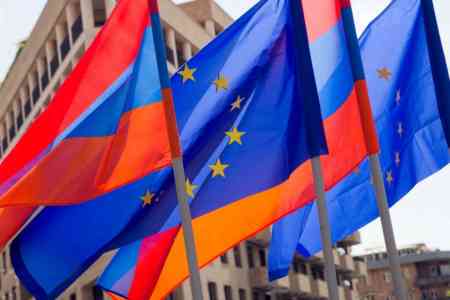 The Armenian Minister of Justice and the EU Ambassador discussed visa liberalization issues for Yerevan.
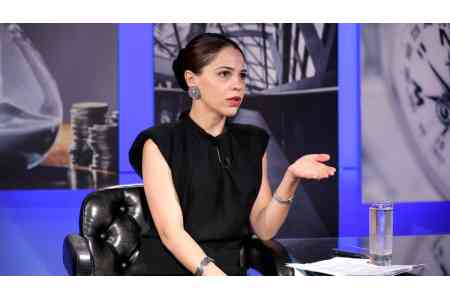 Azerbaijan`s aggressive plans against Armenia became possible in wake of Pashinyan`s decisions on Artsakh - expert
 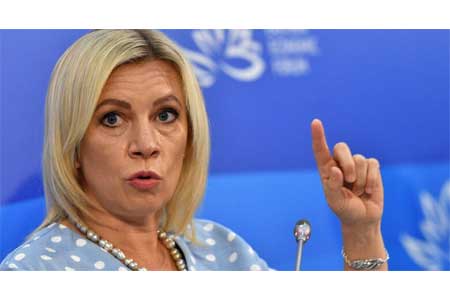 Zakharova: Russia sent a note of protest to Armenia over the act of vandalism at the "Mother Armenia" memorial in Gyumri
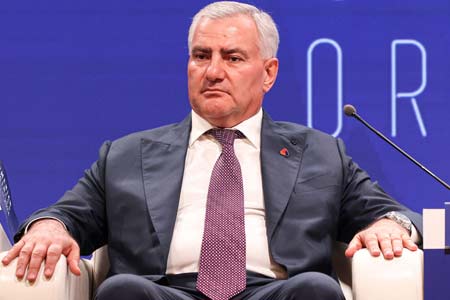 Samvel Karapetyan proposes creating a post-election opposition coalition
 Artsakh`s Cultural Heritage Ombudsman called on Moscow to respond to destruction of WWII monuments by Azerbaijan in occupied NKR
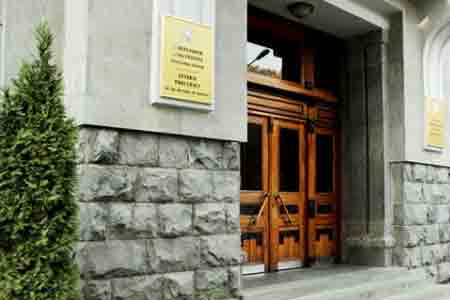 Prosecutor General`s Office petitions Central Electoral Commission for criminal prosecution of Robert Kocharyan
 Dutch Prime Minister expresses his support for Armenia`s democratic reform and economic diversification agenda
 Heritage: It`s time for Armenia`s opposition to present people with legitimate alternative to power