
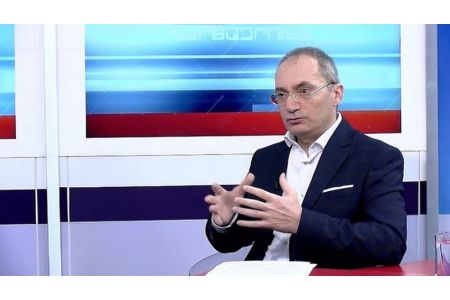
Arminfo. EU Special Representative for the South Caucasus Magdalena Grono defends her visit and the visits of other diplomats to Artsakh, rejects Azerbaijan’s crimes and the ethnic cleansing carried out in Artsakh, and no visits to the Mesrop Mashtots Institute of Ancient Manuscripts Museum "Matenadaran" will change her position. This was written by historian and political scientist Armen Ayvazyan.
"If anyone thought that by visiting Matenadaran again, where she had already been, Magdalena Grono had changed her mind and agreed that Gandzasar and Dadivank are historically Armenian spiritual and cultural centers, I must disappoint you—it is not so. In her interview with News.am yesterday, she defends her visit and the visits of other diplomats to Artsakh, rejects Azerbaijan’s crimes and the ethnic cleansing carried out in Artsakh, as a postcondition and an attempt to equate the two sides, including on issues concerning historical, spiritual and cultural heritage. Here is what she says verbatim: "The visit also showed that, essentially, there is no agreement between Armenia and Azerbaijan on the historical facts concerning the specific issue of cultural heritage"", the historian noted.
According to the expert, moreover, when Grono is directly asked about the destruction of Armenian churches, cemeteries and other cultural monuments in Artsakh, she immediately recalls the destruction attributed to "both sides" during the early stages of the conflict, adding that these reports have not yet been "independently verified" by cultural heritage experts.
Thus, Ayvazyan continued, even in the matter of the destruction of Armenian cultural heritage in depopulated Artsakh, the same principle of equating the sides is applied, which removes responsibility from "both sides".
"I want to say that the EU views the Armenian and Azerbaijani perspectives on the history and culture of Artsakh as different but equally valid assessments and does not intend to take any position on this issue. In other words, they are indifferent to historical truth, Armenian religious feelings and national dignity. With this attitude, Grono insults the entire Armenian people. That is precisely why people like her and similar figures should not be invited to Matenadaran and attempts should not be made to explain anything to them. She and her superiors know perfectly well that Gandzasar, Dadivank and all the Armenian churches and monasteries that have survived to this day or have already been destroyed in Artsakh were Armenian", the historian stated.
Ayvazyan is convinced that they should be driven far away from the threshold of Armenian sanctuaries so that they finally understand at least something about Armenian history and culture. The historian is certain that otherwise they will continue to insult, falsify and lie, develop plans to destroy Armenians together with the Turks and Azerbaijanis, and ruthlessly implement them, dulling the vigilance of Armenians with such empty visits.
"Unfortunately, this elementary political and diplomatic truth will probably be understood by very few people in Armenia, and they will continue to receive these "Gronos" with respect and explain something to them", Ayvazyan concluded.
It should be noted that at the end of last week it became known that representatives of the foreign diplomatic corps accredited in Baku visited occupied Artsakh. They visited Shushi and Stepanakert, where the Azerbaijani occupation regime is erasing all Armenian presence with the silent encouragement of the so-called civilized international community. They then visited the Armenian monasteries of Dadivank and Gandzasar and listened with admiration to the tales told by Azerbaijani presidential aide Himket Hajiev about how they were allegedly Albanian sanctuaries. Among the participants was also the EU Special Representative for the South Caucasus, Magdalena Grono, who also witnessed the show staged by Azerbaijani presidential aide Hikmet Hadzhiev. The latter, in particular, attempted to accuse Armenia of falsifying history, choosing as his tool the models of ancient manuscripts that were displayed in the museum of occupied Gandzasar.















 An Armenian political analyst exposed Hajiyev’s lies and attempts to mislead diplomats accredited in Azerbaijan in occupied Artsakh
 Expert: The circus surrounding the “Albanization” of Armenian culture in the presence of foreign ambassadors in occupied Artsakh is genocide
 Tevanyan: Armenia, like Ukraine and Moldova, is being drawn into the EU’s global war
 Yerevan City Hall is considering introducing a valet parking system in the city
 Political scientist: If Russian-Armenian relations are destroyed, Turkey will take Russia`s place
 Political scientist: The Armenian public is simply obliged to significantly change the entire content of public discourse and struggle
 Cross tattoos are being removed from the skin of Christian prisoners in Azerbaijan by fire, according to a human rights activist.
 Zakharova: Armenia`s likely introduction of visas with Russia will be a step against Yerevan itself
 Putin: Armenia`s recognition of Karabakh as part of Azerbaijan in Prague has given Russia`s position on this issue an ambivalent character
 Putin: Armenia`s adoption of the law on EU accession means an announcement of its withdrawal from the Eurasian Economic Union
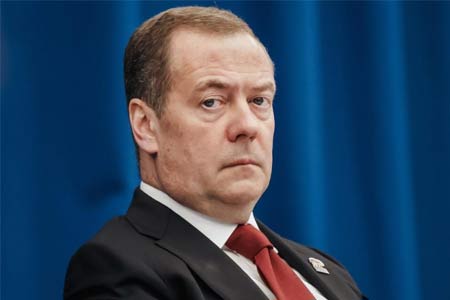 Medvedev: Yerevan will never become an EU member, but it will permanently damage relations with the Eurasian Economic Union, including with Moscow.
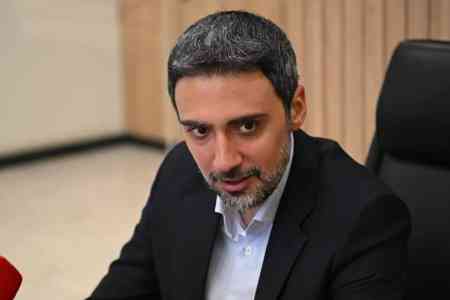 Aram Vardevanyan: Public demands solutions, not apology scandals in Parliament
 Arrested Armenian oligarch on economy and new jobs
 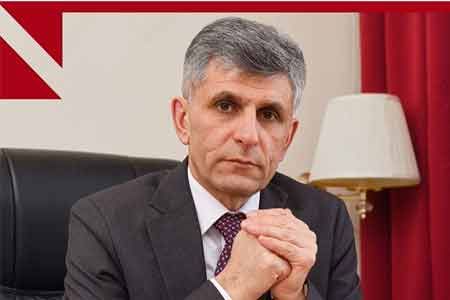 "In Baku, we gave a worthy rebuff to the false claims regarding the past and present of our people" – Former Artsakh Parliament Speaker from Baku captivity
  NA Vice Speaker candidate believes his wife`s salary as director of HayPost is the lowest in the company`s history