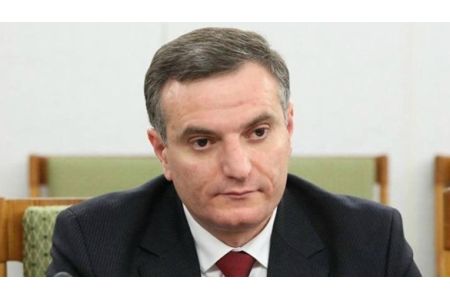
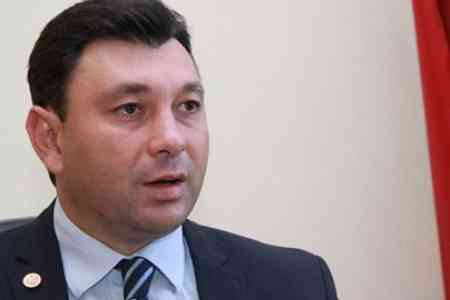
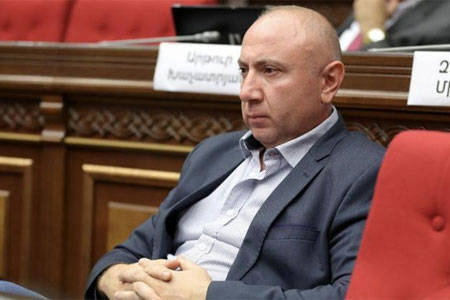
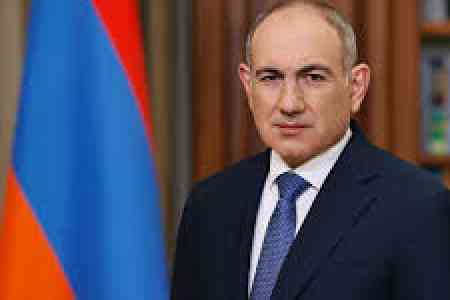
ArmInfo. Armenian Prime Minister Nikol Pashinyan is using every possible means to find loopholes to return Armenian products to the Russian market. Artak Zakaryan, a member of the board of the Republican Party, writes about this in his article.
"As predicted (I wrote about this 20 days ago), having realized the dire consequences of his futile actions, Nikol reappeared in Russia. Not at a high-level, official Moscow, but at the Innoprom-2026 exhibition in Yekaterinburg. I'm sure he went to look for ways to return to Moscow. Ursula von der Leyen's visit did not provide financial or economic consolation for the ruling Civil Contract party. There were many promises, but incomparably little real support. Moreover, Europe is already providing significant support to the Civil Contract party in its "victory" in the elections at any cost and in the constant persecution of political opposition figures. So Pashinyan has nothing to complain about from the EU; they are helping him as best they can to cling to power and conceal the loss of Artsakh," Zakarian noted.
He added that the EU's primary concern today is whether Nikol Pashinyan will be able to completely sever relations with Russia. The problem is that Armenia's economic dependence on Russia is significantly greater than Moldova's, and, furthermore, Armenia does not share a border with the European Union.
"The RA Ministry of Foreign Affairs makes no secret of the fact that for now they would like to maintain favorable economic relations with Moscow while distancing themselves from it in the security sphere. Judging by the already tense situation between the EU (NATO) and the Russian Federation, Nikol's Western partners will put even more pressure on him in the near future and will not allow him to "sit on two chairs" (Alain from Aghdam was the first "victim" of this policy). The EU's "Eastern Partnership" has ruthless experience in this regard. We've seen Ukraine, we've seen Moldova, and earlier we've seen Georgia, where economic benefits from ties with Russia played no role in political choices. When the choice is made in favor of Russia's adversaries, the socioeconomic interests of these countries fade into the background.
Why? Because the regimes that came to power in these countries, as well as in Armenia, have pursued and continue to pursue one goal: to secure the role of "victim" of contradictions between the EU and Russia, and, if necessary, of war, for the sake of the EU's security and well-being. Our friend Georgia, After his own experience, he refuses to follow this path a second time. In parallel with the current EU problem, for us Armenians, against the backdrop of anti-Russian sentiment, the question is becoming increasingly pressing: "Are we being led to Europe or to Turkey?" Perhaps the most pressing issue in the debate is whether the declared "movement" toward Europe actually conceals a Turkish agenda and the Turkification of Armenia.










 RA Government guarantees high salaries for CC justices, Syunik families deprived of family benefits - politician
  Armenian experts, leading Turkish think tanks discuss prospects for expanding cooperation
  Political Scientist: As long as the opposition remains silent, Pashinyan can use Plan B and secure a constitutional majority
 Zakharova: Armenia`s pro-EU pivot poses economic security risks to EAEU member states
 It`s time for South Caucasus countries to think of South Caucasus as single, unified region - RA premier
  Pashinyan: Armenia and Azerbaijan should leave each other alone
 Moscow sees situation with Armenia as attempt to attack Russia-involving integration associations - Russian presidential aid
 Zakharova: Armenia views relations with Russia as tool for financially securing reorientation toward EU
 The Armenian Minister of Justice and the EU Ambassador discussed visa liberalization issues for Yerevan.
 Azerbaijan`s aggressive plans against Armenia became possible in wake of Pashinyan`s decisions on Artsakh - expert
  Zakharova: Russia sent a note of protest to Armenia over the act of vandalism at the "Mother Armenia" memorial in Gyumri
 Samvel Karapetyan proposes creating a post-election opposition coalition
 Artsakh`s Cultural Heritage Ombudsman called on Moscow to respond to destruction of WWII monuments by Azerbaijan in occupied NKR
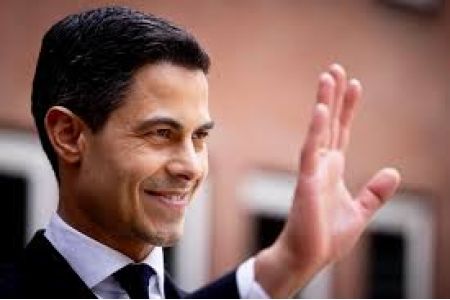 Dutch Prime Minister expresses his support for Armenia`s democratic reform and economic diversification agenda
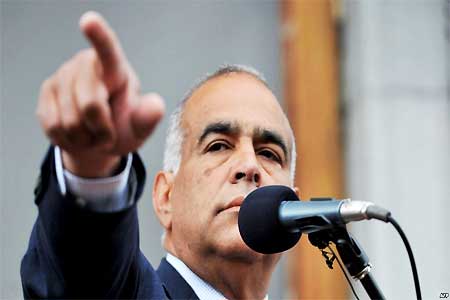 Heritage: It`s time for Armenia`s opposition to present people with legitimate alternative to power
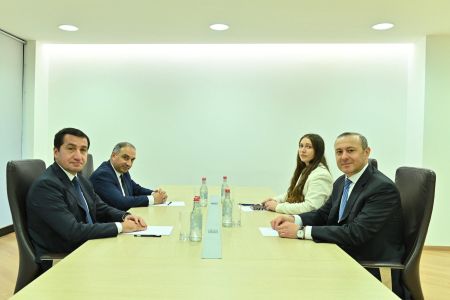 RA Security Council Sec, Assistant to President of Azerbaijan hold negotiations in Dilijan