
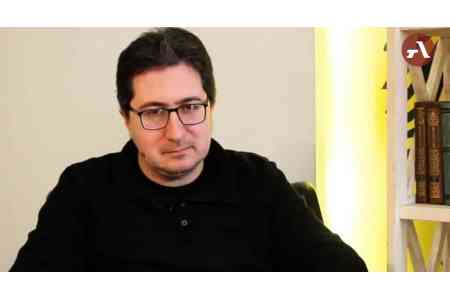
ArmInfo. The global trend of dismantling treaty mechanisms will also have an impact on the South Caucasus region, as stated by political scientist David Arutyunov in an interview with an ArmInfo correspondent. He was talking about the intention of the Armenian authorities to shorten military service, which was seen in the Armenian expert community as another step by the Armenian authorities to appease Azerbaijan.
According to the expert, such a decision by the authorities could be motivated by three factors. Firstly, to attract more contract soldiers and reduce the conscription component. Secondly, as a strategic move before the upcoming parliamentary elections in June 2026, to gain voter support.
"This is also an attempt to demonstrate that the criticism coming from Baku is groundless, namely, that Armenia is not arming itself. This sends a message that Armenia does not pose a threat to Azerbaijan," the expert believes.
Speaking about the likelihood of renewed hostilities in the region, the political scientist noted that Azerbaijan not only continues to increase diplomatic pressure on Armenia in the context of Yerevan's constant concessions, but also to build up its military power. In this vein, Arutyunov did not rule out the use of military force by Azerbaijan in the event of a change in the regional situation. In particular, the resumption of tension around Iran, against the backdrop of the Washington agreements and increased US involvement in the affairs of the South Caucasus.
"And if Armenia does not have alternative defense mechanisms at that time, the country will find itself in a difficult situation. However, the ongoing militarization of Azerbaijan is not only based on the logic of attacking Armenia, but is also the result of a policy that has justified itself and demonstrated its effectiveness. Azerbaijan understands perfectly well that their current dominance in the region is largely due to their military potential. Therefore, regardless of how the situation around the signing of a peace treaty with Armenia will develop, they will continue to develop this tool," the expert emphasized.
Touching on the Armenian authorities' steps to reduce the number of the country's Armed Forces, the political scientist expressed his conviction that these actions are generally not unfounded in the context of a sharp deterioration in the military-strategic position of the country. "We must take into account that if before 2020 the country dealt exclusively with Azerbaijan, when the potential of the two countries was generally comparable, today we are dealing with Turkey's obvious interference. Therefore, it is important to separate propaganda from real life. In theory, the army really comes first, but we need to correctly assess its capabilities today," Arutyunov noted.
The expert is confident that Armenia today really needs other security mechanisms, but this does not mean that the fact of the army should be disregarded. "Ideally, they need to be combined correctly, and their capabilities realistically assessed," the political scientist added.
He believes that today the country is moving towards the Western model until 2022, which assumed compact professional forces. This, as Arutyunov noted, carries risks, given the challenging nature of armed conflicts and its controversial nature in the case of Armenia. "Such a decision may also be a way to hide new concessions, a tactic inherent to these authorities. What the authorities have declared is indeed applicable in theory, but the question arises as to how effectively it will be implemented in practice. Of course, today Armenia does not have enough resources to solve its problems by military means - other mechanisms are needed. But we should not forget that the military mechanism plays a decisive role in all this," the expert concluded.






















 Armenian experts, leading Turkish think tanks discuss prospects for expanding cooperation
  Political Scientist: As long as the opposition remains silent, Pashinyan can use Plan B and secure a constitutional majority
 US-Iranian memorandum more beneficial for Iran from political and economic perspective - expert
  Political analyst: While Pashinyan pledges peace with Azerbaijan, Baku continues promoting the "Western Azerbaijan" project
 Political analyst: In light of new realities, Yerevan may propose advancing peace process with Baku without constitutional referendum
 Zakharova: Armenia`s pro-EU pivot poses economic security risks to EAEU member states
 It`s time for South Caucasus countries to think of South Caucasus as single, unified region - RA premier
  Pashinyan: Armenia and Azerbaijan should leave each other alone
 Moscow sees situation with Armenia as attempt to attack Russia-involving integration associations - Russian presidential aid
 Zakharova: Armenia views relations with Russia as tool for financially securing reorientation toward EU
 The Armenian Minister of Justice and the EU Ambassador discussed visa liberalization issues for Yerevan.
 Azerbaijan`s aggressive plans against Armenia became possible in wake of Pashinyan`s decisions on Artsakh - expert
  Zakharova: Russia sent a note of protest to Armenia over the act of vandalism at the "Mother Armenia" memorial in Gyumri
 Samvel Karapetyan proposes creating a post-election opposition coalition
 Artsakh`s Cultural Heritage Ombudsman called on Moscow to respond to destruction of WWII monuments by Azerbaijan in occupied NKR
 Prosecutor General`s Office petitions Central Electoral Commission for criminal prosecution of Robert Kocharyan
 Dutch Prime Minister expresses his support for Armenia`s democratic reform and economic diversification agenda
 Heritage: It`s time for Armenia`s opposition to present people with legitimate alternative to power
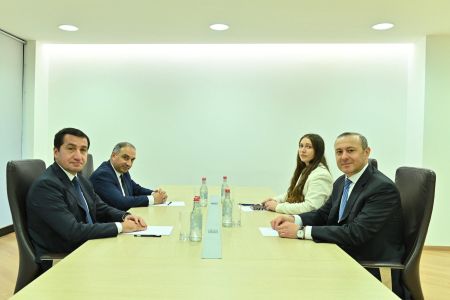 RA Security Council Sec, Assistant to President of Azerbaijan hold negotiations in Dilijan
 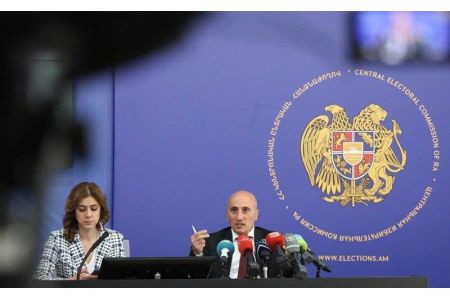 CEC Neutralizes PAP: Three Political Forces to Enter Armenian Parliament Following Election Vote