
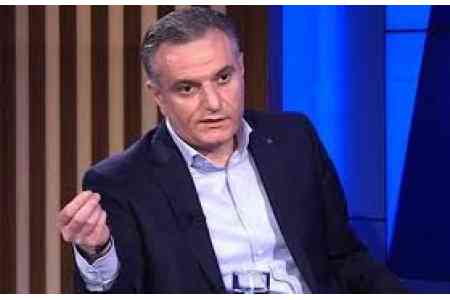
ArmInfo. The meeting between Donald Trump and Vladimir Putin in Alaska became an event that demonstrated a possible turn towards a new "de- escalation" in relations between the two countries. Former Deputy Defense Minister of the Republic of Armenia Artak Zakaryan wrote about this on his Facebook page.
According to him, the negotiations seemed to be held in a businesslike atmosphere, without harsh statements and with noticeable progress on key issues. One of the key signals was the thought of Russian President Vladimir Putin that the war in Ukraine could have been prevented under President Trump.
This assessment not only strengthened the position of the American president as a potential peacemaker, but also set the framework and tone for the discussion of future agreements. Both leaders described the meeting as constructive, which in diplomatic practice serves as an indicator of mutual readiness to seek compromises.
On the Ukrainian issue, US President Donald Trump said that he is close to concluding an agreement with Moscow and sees Putin's interest in this. It is also noteworthy that the vector of responsibility for the lack of peace was clearly directed towards Kyiv. It was noted that "further developments depend on Zelensky's decision." Trump also emphasized that Kyiv must come to terms with the new reality, which takes into account the balance of power and limits Ukraine's prospects in NATO. In return, other security guarantees are being discussed that do not imply integration into the alliance.
As the politician noted, the meeting in Amcorridj also clearly indicated Washington's desire to achieve an immediate ceasefire and move away from the hard line of new sanctions.
"President Trump has directly stated that he does not see the need to increase economic pressure on Moscow in the near future. This signal means that the negotiation process has a better chance of developing without pressure and not falling under the influence of globalists. The nature of the meeting was no less interesting. The personal attitude of the leaders, emphasized greetings and positive assessments create an atmosphere of trust and respect necessary for dialogue on complex issues of world politics. I think that the US President's assessment that Russia remains a "great power" to be reckoned with also sounded symbolic for the Russian President. At the same time, Trump made it clear that he views the crisis not only as a problem for Ukraine, but also as an important element of the global balance. Oddly enough, the rhetoric was noticeable, hinting that the US administration made a strategic mistake by forcing Russia and China to get closer. The meeting in Anchorage showed that Moscow and Washington are ready to seek ways of coexistence, going beyond the logic of the conflict of recent years. The path to a solution will be difficult and slow, but three main results are already evident. Firstly, the issue of periodically tightening sanctions against Russia has been removed, secondly, the responsibility for the failure of the negotiations has actually been shifted to Kyiv, which changes the dynamics of the diplomatic process. Thirdly, the format of the negotiations and the personal mutual understanding of the leaders create a basis for continuing the dialogue," the former deputy minister noted.
He added that the negotiations between Putin and Trump could become a new beginning for a possible change in the architecture of international relations. If the trend towards constructivism continues, a new phase of "de-escalation" may indeed begin in world politics, when instead of confrontation, a pragmatic search for compromises will take center stage.















 South Caucasus is entering a new phase of turbulence - ex-official
  Expert: Azerbaijan`s political leadership states `occupation of Armenia is their new national goal`
  Expert: Armenian society falls into security trap of totalitarianism
 Expert: Pashinyan`s visit to Russia creates prerequisites for restoring dialogue, but thaw in relations is more symbolic
 Human rights activist Ruben Melikyan dismissed from YSU
 Pashinyan removed from INNOPROM guest list
 Zakharova: Armenia`s pro-EU pivot poses economic security risks to EAEU member states
 It`s time for South Caucasus countries to think of South Caucasus as single, unified region - RA premier
  Pashinyan: Armenia and Azerbaijan should leave each other alone
 Moscow sees situation with Armenia as attempt to attack Russia-involving integration associations - Russian presidential aid
 Zakharova: Armenia views relations with Russia as tool for financially securing reorientation toward EU
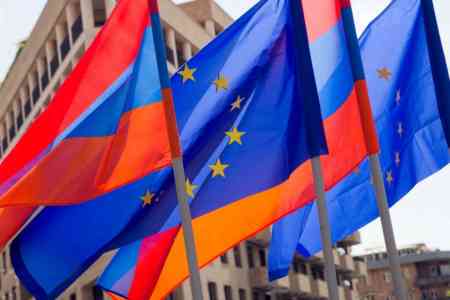 The Armenian Minister of Justice and the EU Ambassador discussed visa liberalization issues for Yerevan.
 Azerbaijan`s aggressive plans against Armenia became possible in wake of Pashinyan`s decisions on Artsakh - expert
  Zakharova: Russia sent a note of protest to Armenia over the act of vandalism at the "Mother Armenia" memorial in Gyumri
 Samvel Karapetyan proposes creating a post-election opposition coalition
 Artsakh`s Cultural Heritage Ombudsman called on Moscow to respond to destruction of WWII monuments by Azerbaijan in occupied NKR
 Prosecutor General`s Office petitions Central Electoral Commission for criminal prosecution of Robert Kocharyan
 Dutch Prime Minister expresses his support for Armenia`s democratic reform and economic diversification agenda
 Heritage: It`s time for Armenia`s opposition to present people with legitimate alternative to power