

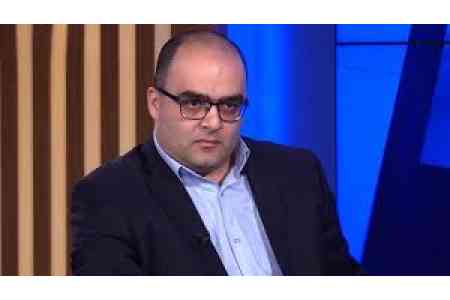
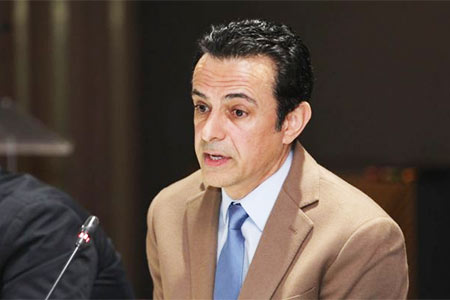
ArmInfo. One must be at least a hopeless neoliberal to believe the claims that the "Trump route" will significantly increase Armenia's security. This is what expert and political science doctor Vahe Davtyan writes in his Telegram channel.
"It is often said that although Washington will not have a military presence in Syunik, American capital will not allow any escalation here for the sake of its own stability and security. In theory, this is all true. However, "on the ground" we have the exact opposite picture. If this approach worked, the presence of the same Western capital would restrain the development of various conflicts in Niger, Sudan, Thailand and many other "boiling points," the political scientist noted.
He urged not to go too far in this matter, recalling that on May 31, 2005, the Minister of Foreign Affairs of the Republic of Armenia Vardan Oskanyan stated that the launch of the Baku-Tbilisi-Ceyhan oil pipeline excluded a military solution to the Artsakh problem. According to him, large-scale armed conflicts in the region are already unlikely.
"The conceptual basis of this statement is the same: "international capital will not allow this." It is not difficult to guess what role this oil pipeline, as well as the Southern Gas Corridor, commissioned in 2020, played in the formation of the international pro-Azerbaijani lobbying system and, ultimately, the de- Armenianization of Artsakh. Now the key beneficiary of the "Trump route" - Baku - is trying to present the new communication as an important hub connecting the West with the East, thereby paving the way for international legitimization of its own expansion of presence in Syunik in the future, preventing any attempts at a real unblockade in the region. This, in turn, is fully consistent with the desire of a number of Western players, as well as Ankara and Tel Aviv, to change the legal status of the Caspian Sea," the expert stated.
On August 8, Armenian Prime Minister Nikol Pashinyan and Azerbaijani President Ilham Aliyev signed a joint "peace declaration" in Washington. It provides for a joint appeal to the Organization for Security and Cooperation in Europe (OSCE) to terminate the OSCE Minsk process and related structures, as well as the creation of a transport corridor through Armenian territory that will connect Azerbaijan with its Nakhchivan exclave. The TRIPP (Trump Route for International Peace and Prosperity) project, a 42-km road in southern Armenia that will hand over control of the road to the United States for 99 years, according to experts, is capable of significantly changing the geopolitical situation in the South Caucasus. On the same day, the Foreign Ministers of Armenia and Azerbaijan initialed a peace agreement, which consists of 17 articles. The preamble of the document states that the Republic of Armenia and the Republic of Azerbaijan, recognizing the urgent need to establish a just, comprehensive and lasting peace in the region, striving to promote the achievement of this goal through the establishment of interstate relations, guided by the Charter of the United Nations, the Declaration on Principles of International Law concerning Friendly Relations and Cooperation among States in accordance with the Charter of the United Nations (1970), the Final Act of the Helsinki Conference on Security and Cooperation in Europe (1975) and the Almaty Declaration of December 21, 1991, and striving to develop relations based on the norms and principles enshrined in the said documents, expressing mutual will to establish good-neighborly relations among themselves, agreed to establish peace and interstate relations.














 Political Scientist: As long as the opposition remains silent, Pashinyan can use Plan B and secure a constitutional majority
 US-Iranian memorandum more beneficial for Iran from political and economic perspective - expert
  Political analyst: While Pashinyan pledges peace with Azerbaijan, Baku continues promoting the "Western Azerbaijan" project
 Political analyst: In light of new realities, Yerevan may propose advancing peace process with Baku without constitutional referendum
 Present-day geopolitical competition shifts from territorial control to infrastructure flows
 Azerbaijan`s aggressive plans against Armenia became possible in wake of Pashinyan`s decisions on Artsakh - expert
  Zakharova: Russia sent a note of protest to Armenia over the act of vandalism at the "Mother Armenia" memorial in Gyumri
 Samvel Karapetyan proposes creating a post-election opposition coalition
 Artsakh`s Cultural Heritage Ombudsman called on Moscow to respond to destruction of WWII monuments by Azerbaijan in occupied NKR
 Prosecutor General`s Office petitions Central Electoral Commission for criminal prosecution of Robert Kocharyan
 Dutch Prime Minister expresses his support for Armenia`s democratic reform and economic diversification agenda
 Heritage: It`s time for Armenia`s opposition to present people with legitimate alternative to power
 RA Security Council Sec, Assistant to President of Azerbaijan hold negotiations in Dilijan
  CEC Neutralizes PAP: Three Political Forces to Enter Armenian Parliament Following Election Vote
 Expert: Even OSCE observers recorded numerous violations during elections in Armenia
  Moscow to await official results of Armenian elections - Peskov