
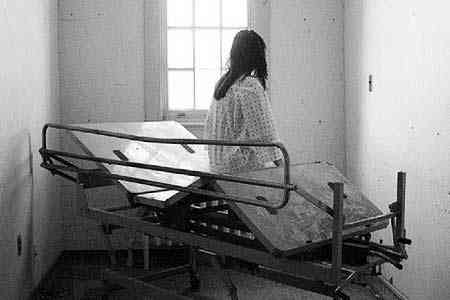
ArmInfo. Representatives of the office of the Ombudsman of Armenia identified a number of problems at the National Center for Mental Health.
According to the press service of the office of the defender of human rights, the Center is overloaded and the standards of the normative area of the living quarters for patients are not respected. Also revealed were the installation of beds in the corridor and the detention of persons with mental health problems, which is unacceptable. Violations of the order of application of measures of restraint were recorded; injuries sustained by the patient or the person exercising deterrence, as well as information on the effectiveness of the measure of restraint, are not recorded properly; means of physical restraint - outdated, and in insufficient quantity; physical restraint is often carried out in wards and in the presence of other patients. Expired medicines and medical supplies were discovered; patients receiving care and compulsory treatment for many years are not subjected to fluorographic examination. The absence of such specialists as a neurologist and cardiologist in the staff was also revealed. Highly specialized consultations are organized when absolutely necessary, and psychiatrists themselves prescribe treatment for somatic diseases, which is unacceptable.
The departments need fundamental repairs, the conditions of the hospital rooms are inadequate (old beds, lack of wardrobes, insufficient artificial lighting, etc.). In addition, the clothing of persons with mental health problems and who cannot personalize it, after washing, is distributed to them according to the principle of randomness.
In some departments of the center, bathrooms are in need of repair. In all departments, there was an urgent need to repair showers. The entrances of the Center are not equipped with ramps, as a result of which patients with mobility problems have difficulty walking and using the toilet. Of concern is the provision of nutrition to patients suffering from various chronic diseases and in need of dietary food. In the dining rooms and kitchens of the offices there is a need for repair. Issues related to the forced feeding of people who refuse to eat were also recorded.
Patients are not duly notified of their rights; adult or legally incapable persons in psychiatric organizations continue to receive treatment with the consent of their legal representatives, being practically deprived of the opportunity to express their opinion about the treatment. In addition, the institution of guardianship is not functioning properly, and proper control over the actions of guardians in the interests of the wards is not exercised. The right to visit persons undergoing a hospital forensic psychiatric examination is not ensured. Patients who do not have an individual mobile phone in the absence of pay phones cannot call relatives or establish a confidential communication with the relevant authorities. Some patients do not have passports, which is why they cannot get a pension, and they cannot be disabled. There is a need for retraining Center staff; the working conditions of its employees are insufficient.
The results of the visit to the Center and the corresponding proposals on resolving the fixed problems were sent to the RA Ministry of Health and the RA Ministry of Labor and Social Affairs.


















 Armenian expert explains how Yerevan`s history is being rewritten in Azerbaijan
 RA Government guarantees high salaries for CC justices, Syunik families deprived of family benefits - politician
  Pashinyan removed from INNOPROM guest list
 Zakharova: Armenia`s pro-EU pivot poses economic security risks to EAEU member states
 It`s time for South Caucasus countries to think of South Caucasus as single, unified region - RA premier
  Pashinyan: Armenia and Azerbaijan should leave each other alone
 Moscow sees situation with Armenia as attempt to attack Russia-involving integration associations - Russian presidential aid
 Zakharova: Armenia views relations with Russia as tool for financially securing reorientation toward EU
 The Armenian Minister of Justice and the EU Ambassador discussed visa liberalization issues for Yerevan.
 Azerbaijan`s aggressive plans against Armenia became possible in wake of Pashinyan`s decisions on Artsakh - expert
  Zakharova: Russia sent a note of protest to Armenia over the act of vandalism at the "Mother Armenia" memorial in Gyumri
 Samvel Karapetyan proposes creating a post-election opposition coalition
 Artsakh`s Cultural Heritage Ombudsman called on Moscow to respond to destruction of WWII monuments by Azerbaijan in occupied NKR
 Dutch Prime Minister expresses his support for Armenia`s democratic reform and economic diversification agenda
 Heritage: It`s time for Armenia`s opposition to present people with legitimate alternative to power
 RA Security Council Sec, Assistant to President of Azerbaijan hold negotiations in Dilijan