


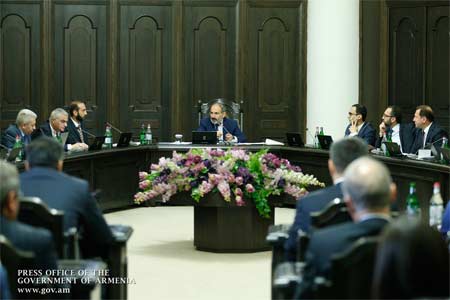
Arminfo. As part of the RA Government Program for 2026-2031, 733 measures will be implemented. At its November 19 meeting, the RA Government approved a program of measures planned for implementation during the specified period.
Presenting the program, Deputy Prime Minister Mher Grigoryan emphasized that the program of measures is based on the principle of "Real Armenia" and the commitments undertaken by the "Civil Contract" party following the parliamentary elections held in June. A significant part of the work will be a logical continuation of the reform programs launched in 2021-2026. The program is to be implemented across 6 main areas of reform: foreign policy and security, human capital and well-being, urban development and infrastructure, democracy, the rule of law and the fight against corruption, public administration efficiency, and digital transformation.
Grigoryan noted that, as a result of implementing the measure concerning foreign policy and security, the government has, in particular, planned to strengthen the established peace between Armenia and Azerbaijan through its further institutionalization. The "Crossroads of Peace" and TRIPP projects are also planned to be implemented, and work will be carried out to liberalize the visa regime with the European Union for the country’s citizens.
In the context of the "human capital and well-being" measure, it is planned to continue work to improve the quality of education, which the RA Government recognizes as one of its main priorities. As a result of the implementation of educational, healthcare and social measures, the poverty rate in Armenia will be reduced by 5 percentage points. Priority programs will be developed and implemented in this area, including the construction and renovation of 300 schools, 30 colleges, 100 non-educational institutions, 100 kindergartens, and 100 combined playgrounds, including swimming pools. The construction of an Academic City and dormitories for 3,800 students is also planned. The Cabinet also intends to include the entire population of the country in the universal health insurance system. As the Deputy Prime Minister noted, the focus of economic policy will be on increasing productivity and competitiveness, as well as diversifying trade. In this regard, the government plans to ensure annual economic growth of 6%, create 125,000 new jobs, at least double the volume of exports of products manufactured in the country, and ensure 50% growth in industrial production. It is also planned to increase gross agricultural output by at least 50% and double grain production.
The Deputy Prime Minister noted that infrastructure would continue to remain a focus of the government’s attention. In this area, work will be carried out to launch construction of the Kaps Reservoir, which is to be completed within five years. Water pipelines with a total length of 350 km will also be built and renovated, and an additional 10,000 hectares of agricultural land will be provided with irrigation. It is also planned to transition to a 24-hour water supply regime for consumers in Yerevan, Gyumri and Vanadzor. The country’s authorities have set themselves the task of building and renovating 2,500 km of roads and 40 bridges. To ensure energy security, work will be carried out to integrate the region’s energy systems. As part of ensuring energy self-sufficiency, the goal is to commission photovoltaic power plants with a capacity of 1,000 MW and storage plants with a capacity of 800 MW.
In the context of justice and public administration, the government will pay special attention to the guaranteed protection of human rights, including through the provision of quality services. Among its priorities, the government will focus its efforts on the recovery of illegally acquired property, as well as on the digitalization of state and community services.
The Deputy Prime Minister added that, starting in 2027, a system for monitoring and improving accountability for the implementation of the program would be introduced.













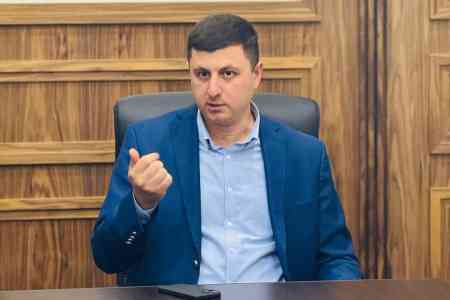 A security sphere expert commented on a video about Papikyan`s achievements during his five years as Defense Minister
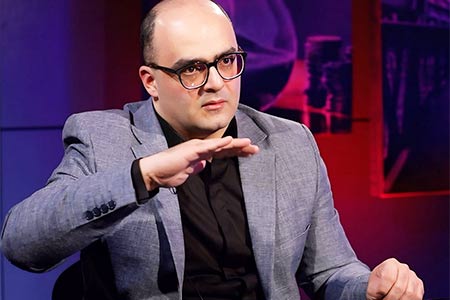 The future of the South Caucasus was discussed in the capital of a country whose problem remains unresolved — Davtyan
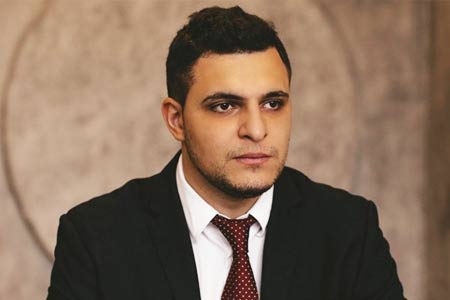 An Armenian orientalist presented possible US actions against Iran
 Expert: Official Yerevan should not base its calculations in relations with Ankara on the "crack" in the Turkish-Azerbaijani alliance
 Armenia wants to host COP-34 in 2029
 Speaker: Armenia has never approached the CSTO regarding the Karabakh issue
 Lavrov: Armenia will not be expelled from the CSTO
 Drmeyan: The ECHR rejected Azerbaijan`s appeal in the case of Artsakh Defense Army Major Hayk Toroyan
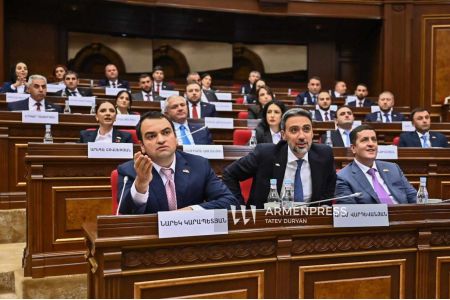 "Strong Armenia": The brawl in parliament was staged to distract public attention from Pashinyan`s failed foreign policy
 Zakharova commented on the scandalous epithets of the governor of Armenia`s Shirak region about "Ivanov"
 Nikolai Bordyuzha proposed excluding Armenia from the CSTO.
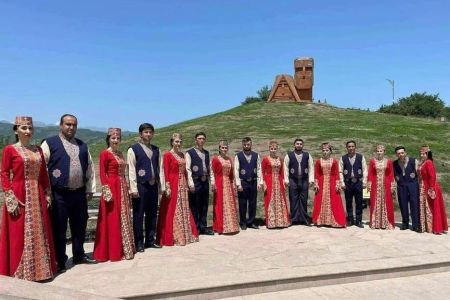 The participation of Artsakh ensembles in an international festival in Vienna was cancelled following the intervention of several foreign embassies
 Expert: It`s time for Armenia to move away from uncertainty and choose between West and East
 The Armenian Foreign Minister commented on the country`s return to work within the CSTO.
 The Artsakh Public Council expressed outrage at the UN Secretary-General`s behavior
 Lukashenko called for Armenia to assume the CIS presidency in 2029
 Dmitry Medvedev predicted a Ukrainian-like fate for Armenia amid the country`s shift in foreign policy
 Russian Security Council: In Armenia, they want to force Russian asset owners to dispose of their assets