


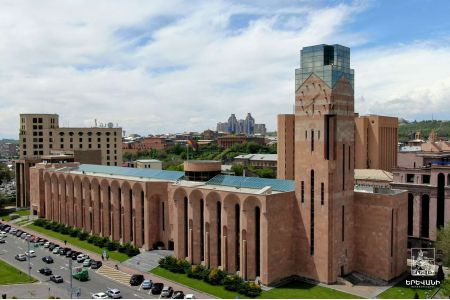
ArmInfo. The National Academy of Sciences of Armenia is preparing for major structural changes. This was announced by NAS RA President Ashot Saghyan at a meeting of the Academy dedicated to its establishment on November 10, 1943.
Ashot Saghyan emphasized that the structure of the NAS will be significantly altered in accordance with the Academy's powers and core functions. It is planned to reduce the current five departments to three: physics, mathematics and engineering, natural sciences, and humanities and social sciences. Six expert committees with corresponding subcommittees and three problem-oriented professional councils will be established within the departments. Expert committees will review fundamental, targeted, and thematic projects to support the infrastructure of all scientific organizations and laboratories, monitor their implementation, and evaluate annual reports.
"We are talking about 78 fundamental, 55 targeted, and 751 state-funded grant programs being implemented in the Republic of Armenia. We must carry out this work by utilizing the existing scientific potential in the republic outside the Academy, the capabilities of our international members, and expert competencies," said Ashot Saghyan. According to him, the councils should organize scientific discussions on various issues and problems arising in government agencies, the private sector, and various sectors of society, as well as provide professional opinions and conclusions.
One of the Academy's functions is to participate in the awarding of academic degrees. It is planned to coordinate the activities of the 69 professional councils currently operating in the republic, and dissertation defenses will be organized by academic departments.
According to the NAS President, one of the Academy's most important functions will be compiling and submitting reports on the state of the scientific field to the country's government. To this end, it is planned to establish a scientific analytical center within the NAS, the main goal of which will be to transform the Academy into a key platform for the development of scientific policy, strategic forecasts, and independent expertise.


















 A security sphere expert commented on a video about Papikyan`s achievements during his five years as Defense Minister
 The future of the South Caucasus was discussed in the capital of a country whose problem remains unresolved — Davtyan
 An Armenian orientalist presented possible US actions against Iran
 Expert: Official Yerevan should not base its calculations in relations with Ankara on the "crack" in the Turkish-Azerbaijani alliance
 Armenia and Germany held consultations on defense issues
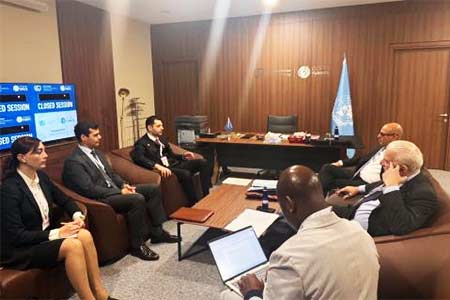 Armenia wants to host COP-34 in 2029
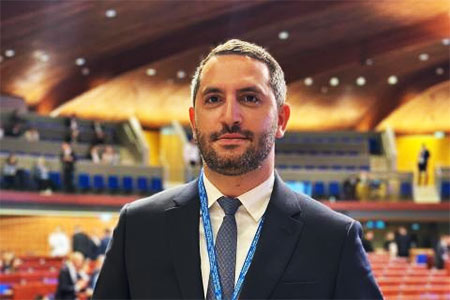 Speaker: Armenia has never approached the CSTO regarding the Karabakh issue
 Lavrov: Armenia will not be expelled from the CSTO
 Drmeyan: The ECHR rejected Azerbaijan`s appeal in the case of Artsakh Defense Army Major Hayk Toroyan
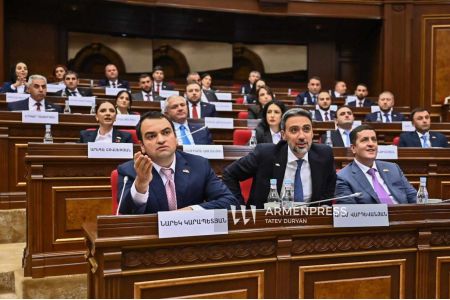 "Strong Armenia": The brawl in parliament was staged to distract public attention from Pashinyan`s failed foreign policy
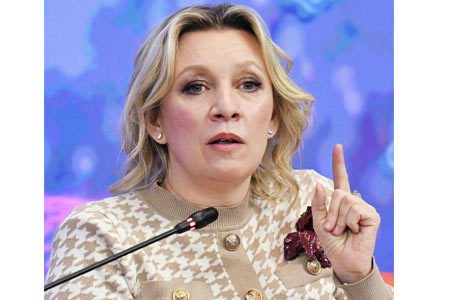 Zakharova commented on the scandalous epithets of the governor of Armenia`s Shirak region about "Ivanov"
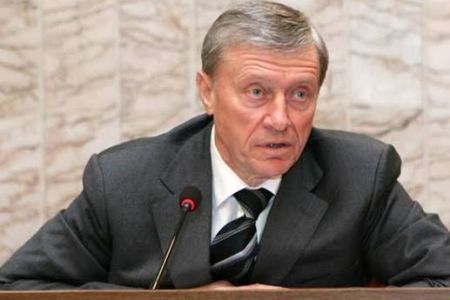 Nikolai Bordyuzha proposed excluding Armenia from the CSTO.
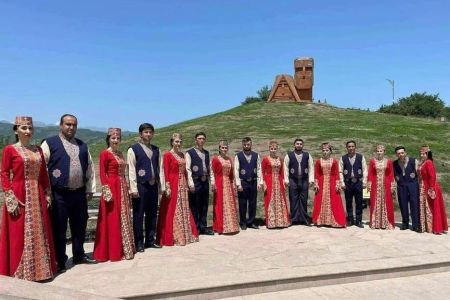 The participation of Artsakh ensembles in an international festival in Vienna was cancelled following the intervention of several foreign embassies
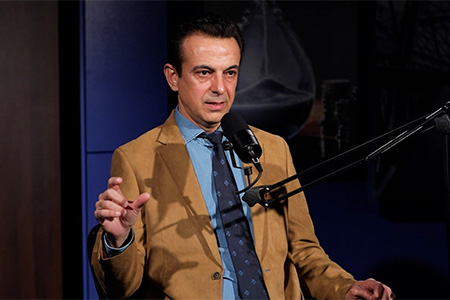 Expert: It`s time for Armenia to move away from uncertainty and choose between West and East
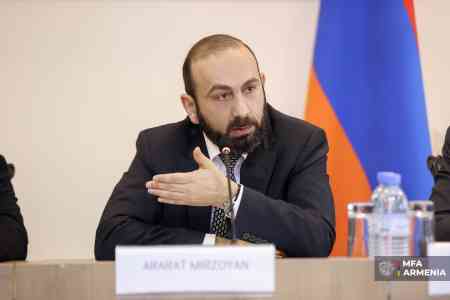 The Armenian Foreign Minister commented on the country`s return to work within the CSTO.
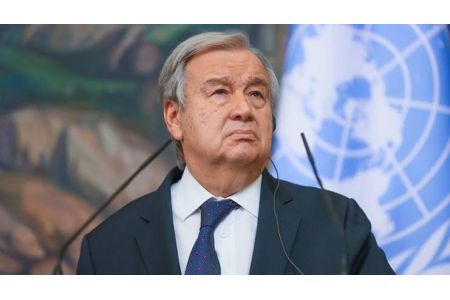 The Artsakh Public Council expressed outrage at the UN Secretary-General`s behavior
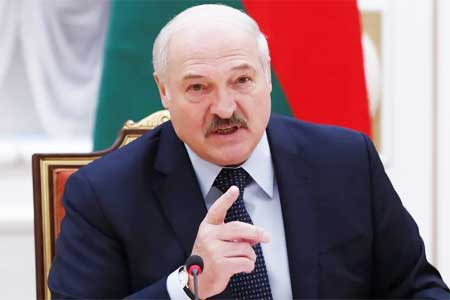 Lukashenko called for Armenia to assume the CIS presidency in 2029
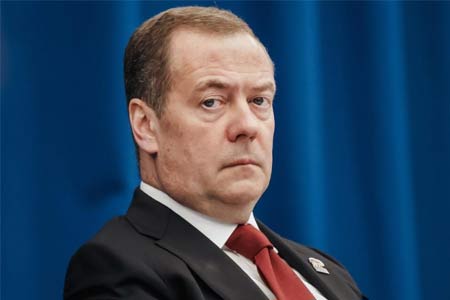 Dmitry Medvedev predicted a Ukrainian-like fate for Armenia amid the country`s shift in foreign policy
 Russian Security Council: In Armenia, they want to force Russian asset owners to dispose of their assets