
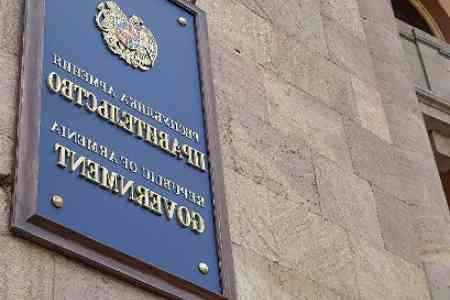
ArmInfo. The Armenian government aims to secure an average annual economic growth rate of 6% for 2026–2031. This is outlined in the Cabinet's draft five-year program, which presents the key expected results of its activities for the upcoming five-year period.
According to the draft, the authorities intend to continue working to strengthen and further institutionalize the peace established between Armenia and Azerbaijan. Measures will be taken to maintain and further develop a favorable security environment around Armenia by normalizing and/or developing relations with regional countries, as well as deepening existing partnerships outside the region. Efforts to unblock transport links for the Republic of Armenia will continue based on the "Crossroads of Peace" initiative and the TRIPP project.
The program also emphasizes that deepening democratic, anti-corruption, economic, and governance reforms will be among the Cabinet's top priorities, which should be reflected in the republic's progress in prestigious international rankings.
Under the document, the entire population of the country will be covered by medical insurance. Work will continue on visa liberalization for EU entry for citizens of the Republic of Armenia. The authorities aim to ensure an average annual economic growth rate of 6%, create 125,000 new jobs, at least triple the volume of the corporate bond market, and at least double the export volume of goods of Armenian origin. Plans also include increasing industrial production (in current prices) by 50%—from 3.3 trillion drams in 2025 to 5 trillion drams in 2031—increasing the gross agricultural product value by at least 50%, and doubling grain production.
The program envisions starting the construction of 10 reservoirs with the goal of completing them by 2033, building and reconstructing 350 kilometers of canals and pipelines, providing irrigation to 10,000 hectares of new land, and resolving 24/7 water supply issues for residents of Yerevan, Gyumri, and Vanadzor.
Additionally, the authorities intend over the next five years to build and modernize 300 schools, 30 colleges, 100 extracurricular institutions, 100 kindergartens, and 100 multi-functional playgrounds (including public swimming pools). They also plan to implement the "Academic City" technological cluster project, including housing for 3,600 of its students, and establish high-end artificial intelligence (AI) computing power of at least 100,000 GPU equivalents (or at least 35,000 GPU equivalents per million residents). This infrastructure will provide the research, educational, startup, industrial, and public sectors of the Republic of Armenia with access to computing resources equivalent to at least 10% of these capacities.
Furthermore, the government plans to continue developing Armenia's national space capabilities by acquiring and launching at least two observation satellites and one communications satellite. This includes developing national ground infrastructure, establishing domestic capacity for satellite management and data processing, and providing access to satellite data and communication services for the state, the scientific and technical community, and the private sector. The program also outlines plans to: commission 1,000 megawatts of photovoltaic power plants and 800 megawatts of energy storage power plants; reduce poverty by 5 percentage points; digitalize essential public and utility services and continue the process of recovering illegally obtained assets. This initiative will include returning unlawfully privatized or leased forests, beaches, parks, and gardens, as well as educational institutions and other public spaces, to community and state ownership and ensure the continuous replenishment of the unified account for recovered funds, with the objective of returning approximately $2 billion worth of illegally acquired movable and immovable property to public use.

















 Political analyst: Uncertainty filled with Hope differs fundamentally from uncertainty filled with despair
 Expert: Israel strikes at Turkey`s military ambitions in Syria
 Expert: Current process is not about peace, but implementing Azerbaijan`s wishlist
 Expert: Real peace unattainable until Armenia-Azerbaijan agreement is signed and ratified
 TRIPP`s proximity to Iranian border could slow its implementation - expert
 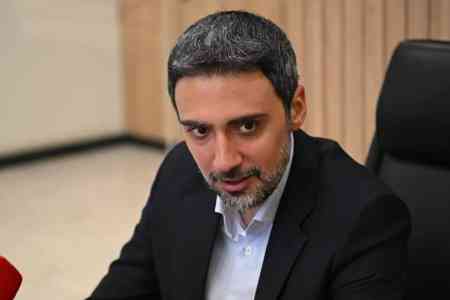 Aram Vardevanyan: Public demands solutions, not apology scandals in Parliament
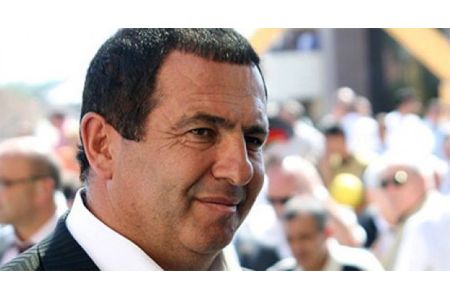 Arrested Armenian oligarch on economy and new jobs
 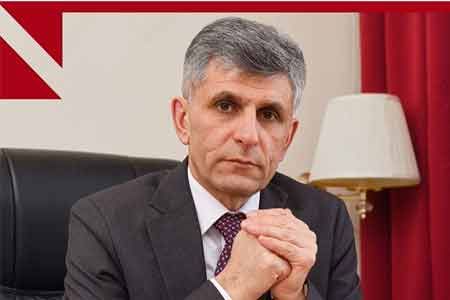 "In Baku, we gave a worthy rebuff to the false claims regarding the past and present of our people" – Former Artsakh Parliament Speaker from Baku captivity
 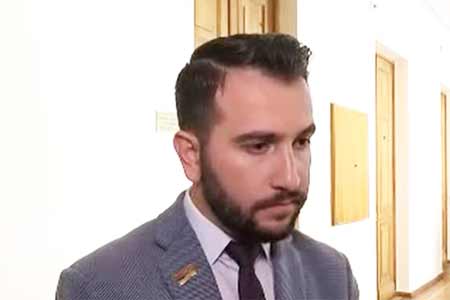 NA Vice Speaker candidate believes his wife`s salary as director of HayPost is the lowest in the company`s history
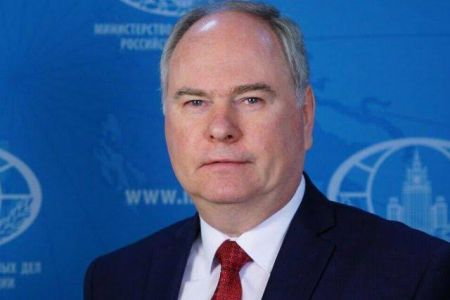 RF Permanent Representative: There is no CSTO-Armenia conflict
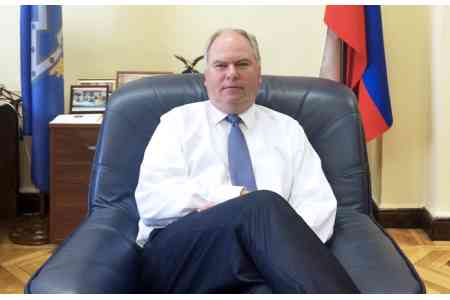 Moscow: NATO seeking to "Pull" Armenia away from CSTO Allies
 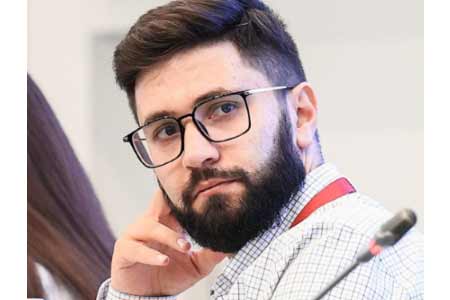 Political analyst: Russia intends to determine which "Camp" Armenia will choose through a referendum
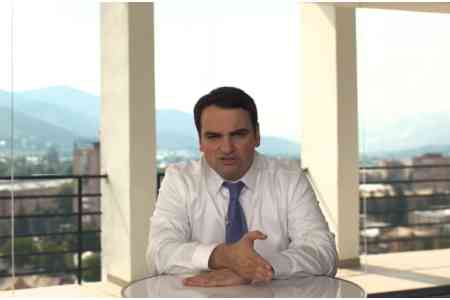 Narek Karapetyan will give up his parliamentary salary in favor of charitable contributions.
 Armenian analyst: Developing relations with Europe and the U.S. must not jeopardize relations with regional powers
 Armenia and France discuss further development of strategic partnership and EU cooperation
  To overcome risks Armenia must reduce domestic escalation - expert
  Zatulin: Pashinyan was eager to get back to Russia because he actually lost the elections
 Human rights activist Ruben Melikyan dismissed from YSU
 Zakharova: Armenia`s pro-EU pivot poses economic security risks to EAEU member states